Tattoo Flash as Folk Art: Why Design Sheets Deserve a Second Look
Explore tattoo flash as a working design resource, a collectible art form, and a record of artists' visual choices.
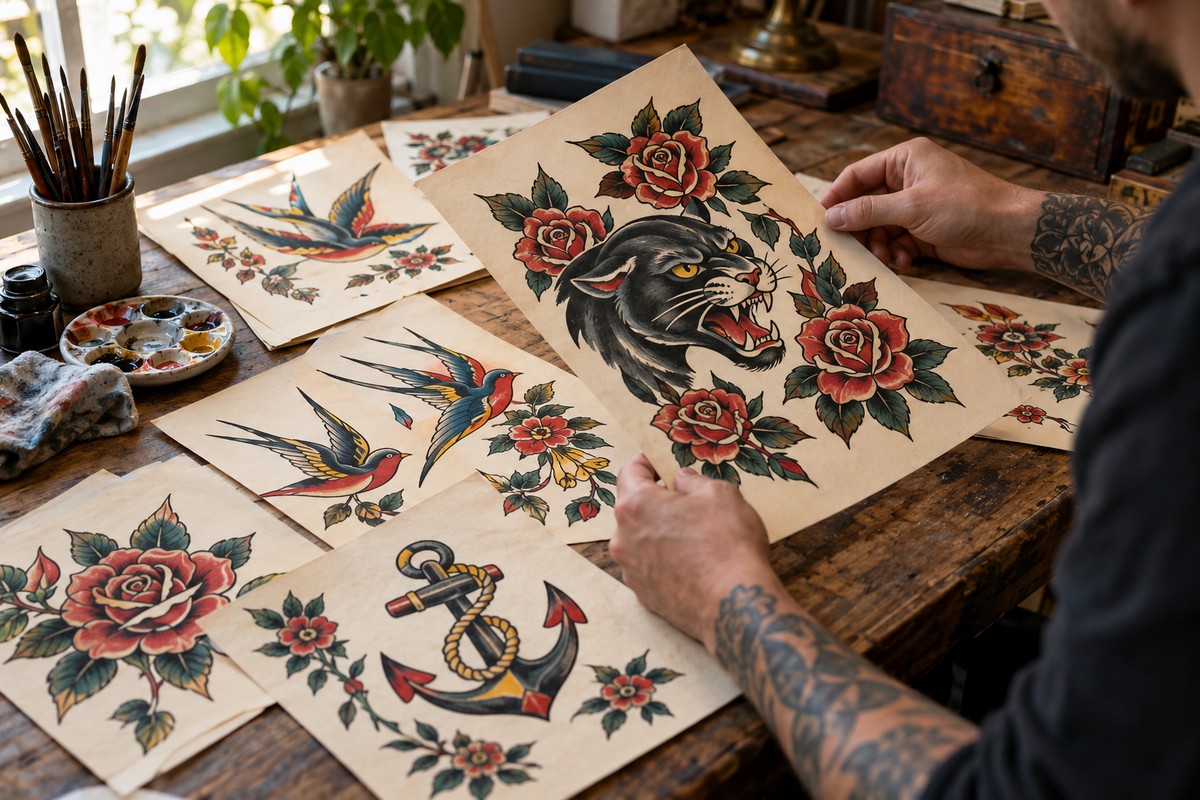
A sheet can hold several stories
Tattoo flash is often encountered as a collection of designs, but the sheet itself can be an interesting art object. The arrangement, color relationships, outlines, and small variations reveal decisions made by the artist. Looking at the whole page helps explain how separate images share a visual language. A sheet can function as both a practical studio resource and an expression of individual craft.
From working surface to collected object
The Tattoo Archive describes interest in flash from collectors inside and outside tattooing. Its account also considers the care given to antique sheets after they move from shop walls into collections. That change in setting alters how an object is viewed. A familiar working resource may become framed artwork, inviting attention to paper, paint, wear, and provenance as well as the designs themselves.
Look closely without inventing a history
Aged paper, pinholes, and fading can be visually compelling, but appearance alone does not establish an artist or date. Reliable attribution requires evidence. Ask where a sheet came from, which claims are documented, and whether an apparent signature has been verified. Reproductions can also be worthwhile, provided they are described accurately rather than presented as originals.
Keep the artist in the frame
Flash appreciation is richer when it includes the maker, not just the motif. Support artists who sell their own work, credit sources when sharing images, and distinguish inspiration from copying. Looking closely at a sheet can reveal rhythm, economy, and personality in a small format. Its value lies in the craft and context that make a group of drawings more than a menu of interchangeable pictures.
Further reading
See the Tattoo Archive’s discussion of flash collecting. The generated feature image contains invented contemporary artwork, not an authenticated historical sheet.